
Key West = Diversity
and the residents wouldn't have it any other way

I recently had the privilege of having dinner with 3 men a bit older than me. They were inspiring. These men, Russ, Don, and Gerry, have been friends for more than half their lives. They have traveled, lived outside the US, sailed sailboats, and flown in private airplanes. They are engineers who can point to projects, parks and preserves in the US and other countries that they helped to create.
Russ shared the story of when he was in the cockpit of his company’s plane. The pilot told him to go to the back of the plane to get the life jackets. They were about to have an emergency landing on water. After crashing onto the water, the men quickly swam away from the aircraft. They watched as the ocean tipped the plane to vertical and then swallowed it whole. Of course, I responded with “Just like the Titanic!” The fact that I’d only seen that phenomenon in a Hollywood movie showed the glaring difference between my life experiences and theirs.
When I asked if they had any regrets, they all answered, “Of course! There is always something you’d change with the benefit of hindsight.” However, they also agreed that they are happy with the lives they led, and they won’t ever be wishing they had enjoyed life more. Of the three, Gerry lives here in Key West. The other 2 drove from the mainland to view the Blue Angels Air Show with their friend. These guys aren’t finished making memories.
I met Gerry (the 80-year-old birthday boy in this photo) in 2022. He moved to Key West 14 years ago and owns two of the most photographed shotgun houses in town. He often says he would not want to live anywhere else. Diversity is a word he uses when describing his love of this island.
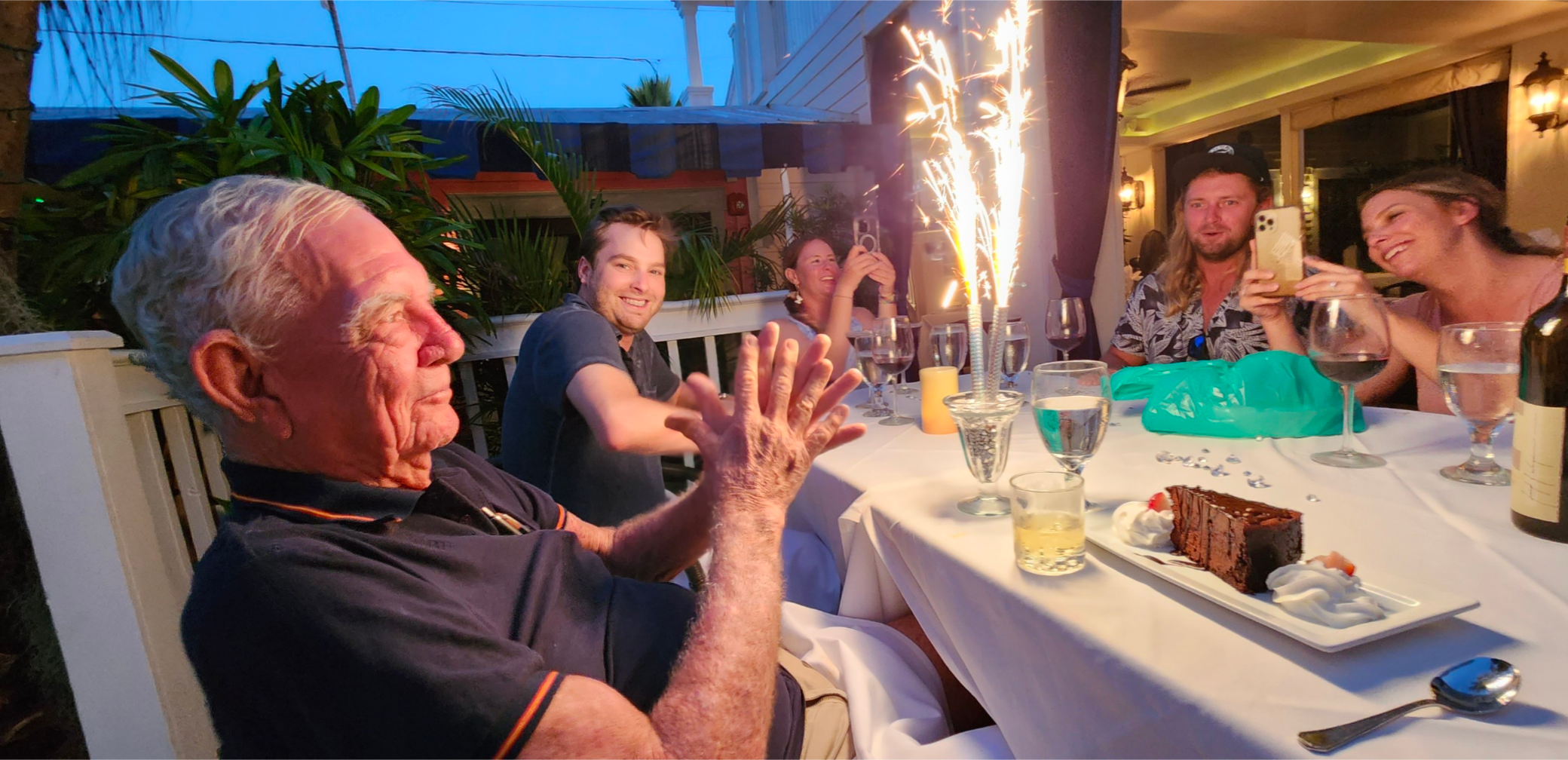
Diversity has struck me as the undeniable reality that is the Key West experience.
I am tempted to list some categories of people, and I’ll do just that, but there are approximately 25,000 folks who reside here, and so potentially 25,000 categories.
Folks whose families have lived here for generations are a category. However, inside that group are the folks whose elders immigrated from the Bahamas. During the second half of the 19th century, many black and white Bahamian families came to Key West. At the same time, folks from the New England states made their way to the Island. The New Englanders were largely mariners. Cigar-making and ocean-based industries made Key West the wealthiest City in Florida in the late 1800s.
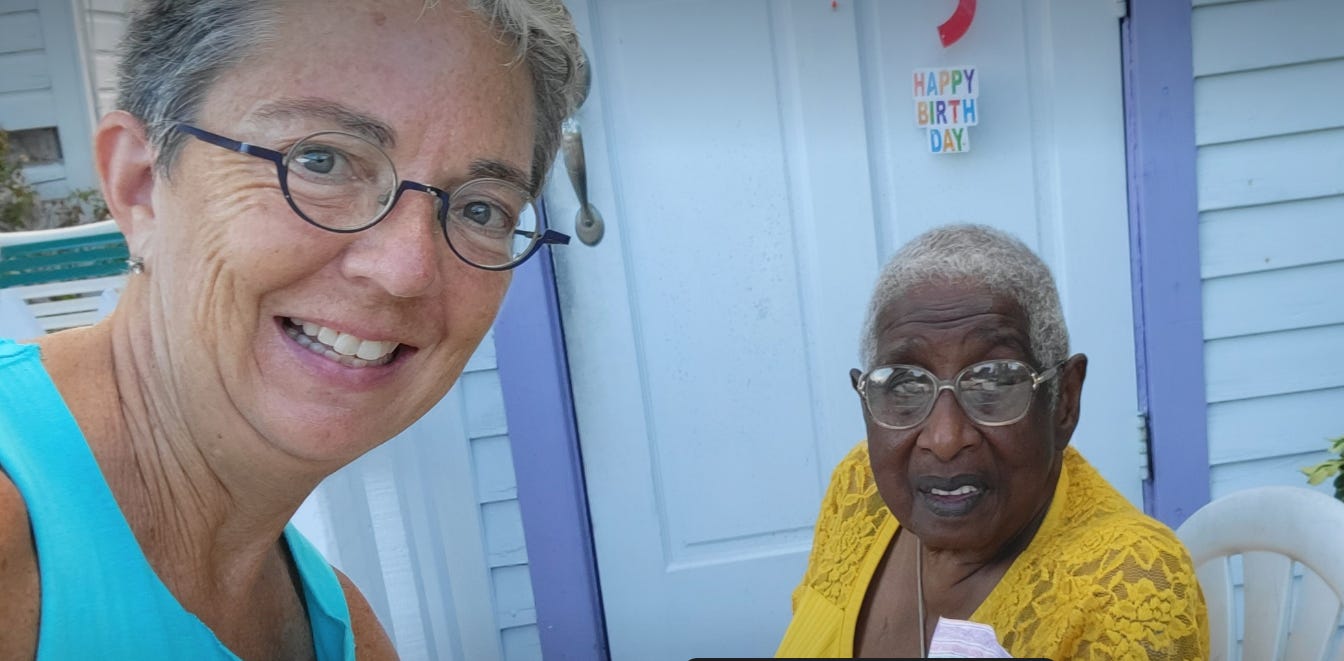
The neighborhood where I live is called Bahama Village. Currently, black American people comprise less than 40% of the population in Bahama Village. Decades ago, it was almost 100% black folks living and working in this neighborhood which once had many thriving black-owned businesses. The Village has changed, but my neighbors’ parents and grandparents have stories to tell. Dina and Robinette, who live next door to me, are related to the folks who used to own my house. In fact, Dina was born in my house. They are related to the beloved musician called Coffee Butler, and musical talent runs through the family. Dina is pictured here and is 98 years old!
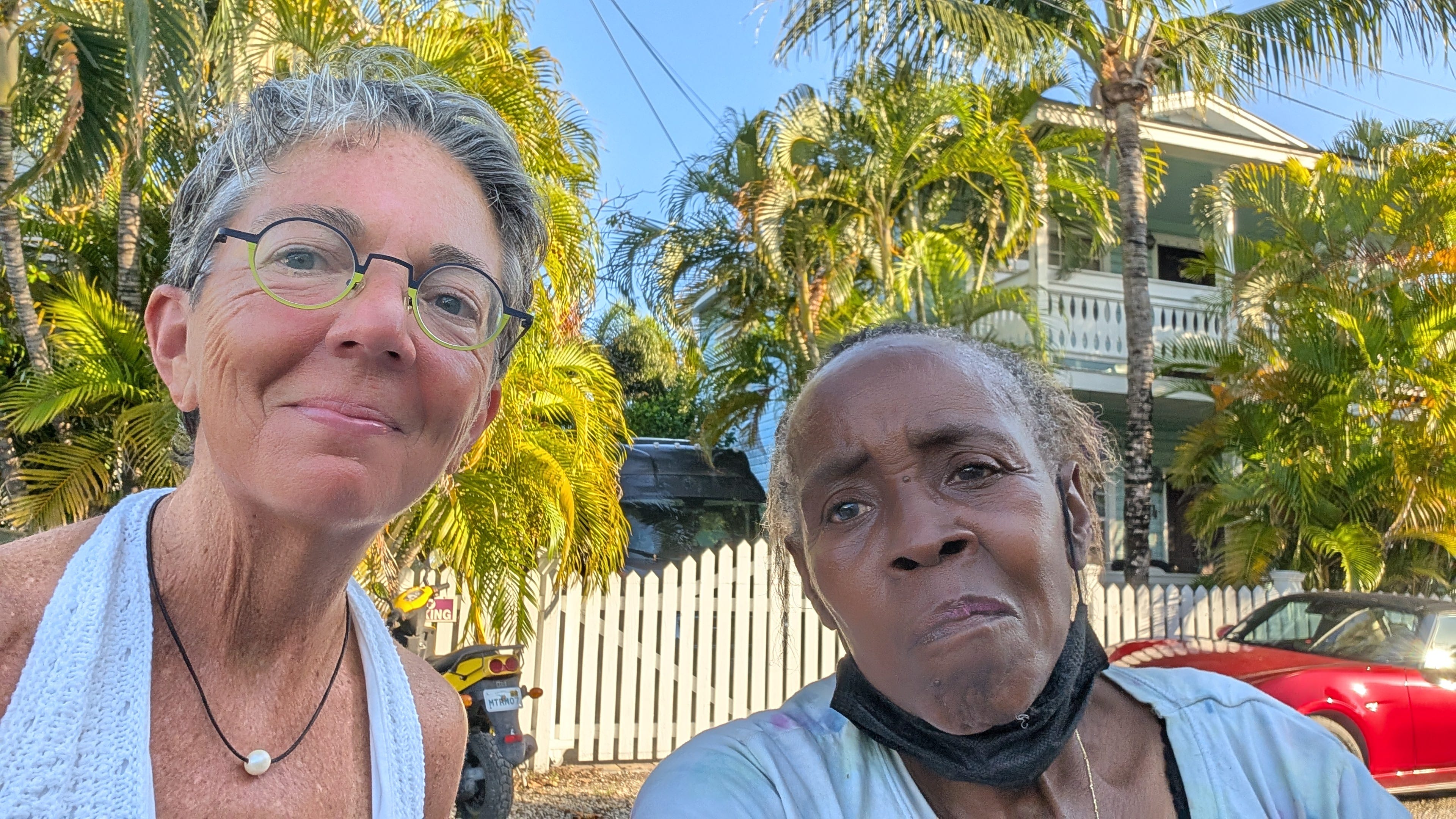
Evelyn lives down the street. She proudly claims to be the only Conch in her family. Her older siblings were all born in Georgia. I was honored when she invited me to her 65th birthday party. This was a signal to me that I was accepted into the neighborhood! If you don’t know, a Conch (pronounced “conk”) is what Key West folks call anyone born and raised on the Island.
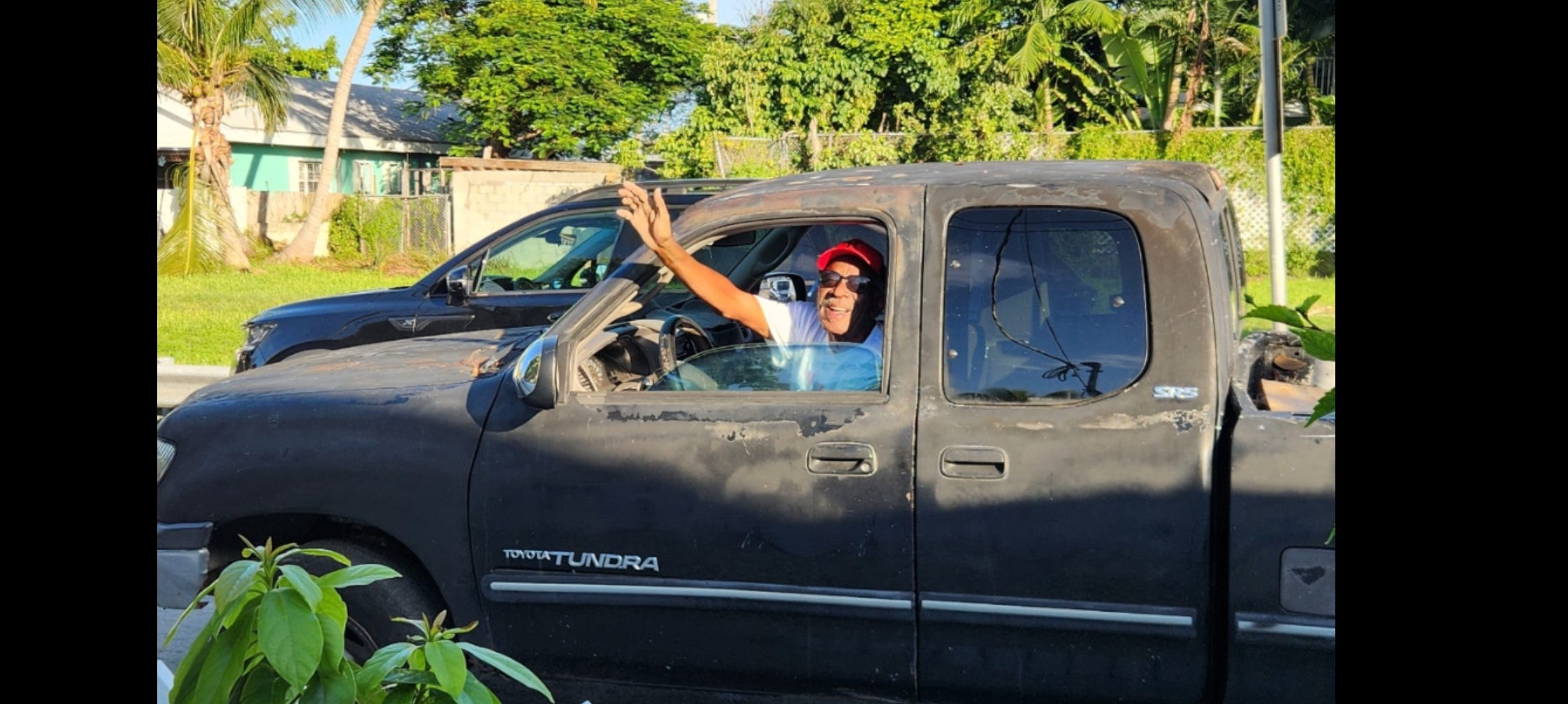
Colton was the first friend I made in Key West. When my father moved to town, he adopted Dad as his cousin and never missed a chance to say, “Hello, Cuz” when he saw Dad on the front porch.
After the heyday of the sponging, wrecking, and cigar industries, Key West became one of the poorest cities in the country. In the 1950s, tourism was decidedly the way out of poverty.
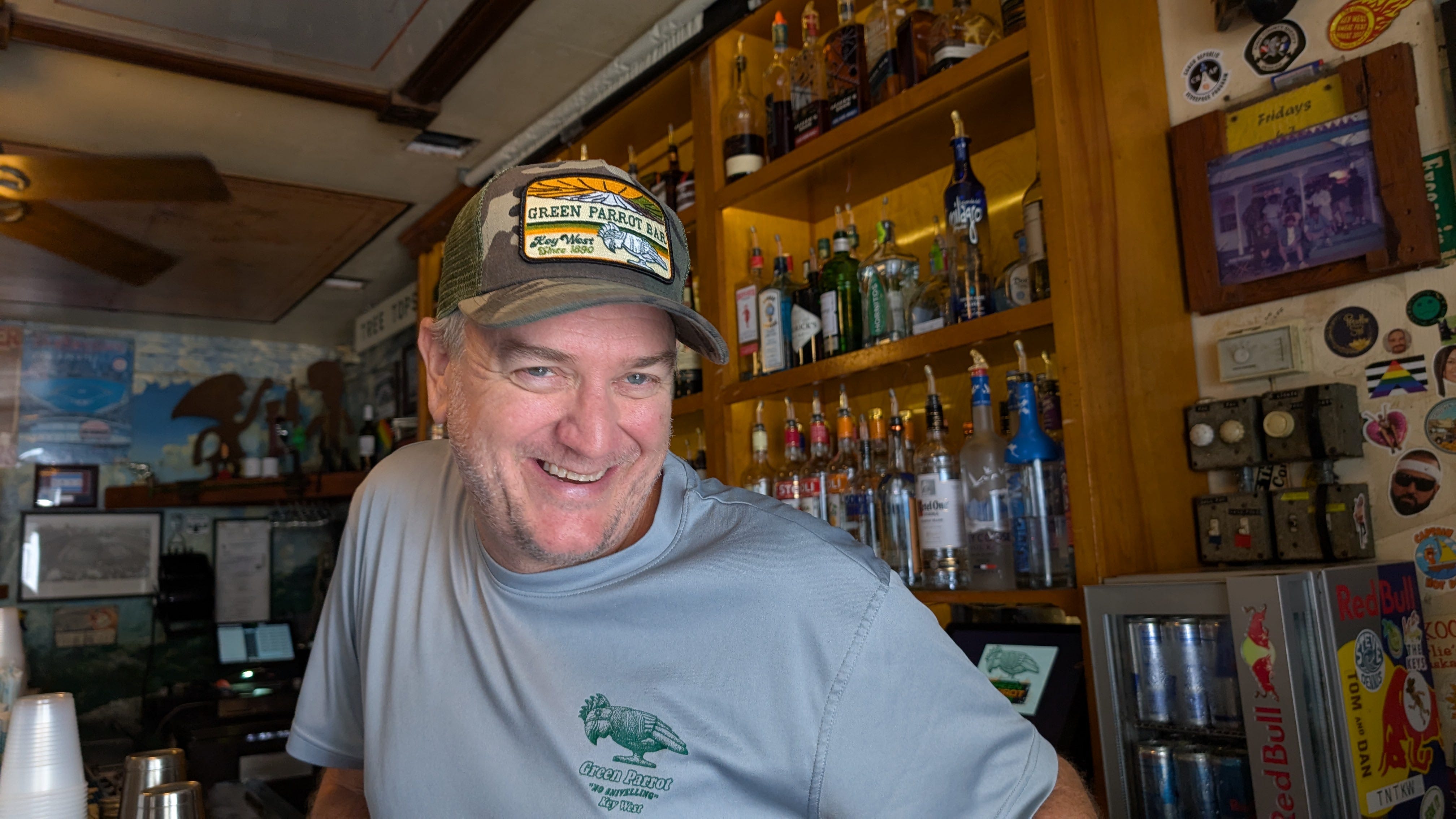
Today, tourism is one way that folks end up living here. When fellow residents ask what brought me here, I tell them about years of vacationing. I tell them that it was always hard for me to leave Key West. Before I can say more, they tell me they had the same experience. Just yesterday BZ, Key West’s favorite bartender, told me, “It took me 22 years of loving Key West to finally move to the island.” On the other hand, there is many a Key West character who’ll tell you, “I came to KW for a week’s vacation, and I never left.”
Creatives, musicians, writers, artists, and actors are drawn to KW. They are drawn to the colorful history and amazing weather. Soon, they become part of the color.
There are young families and retired couples. There are people from all over the world and in every income bracket coexisting as One Human Family. The City officially adopted the One Human Family philosophy on October 17, 2000.
Next “door” to each other are the folks who live on Christmas Tree Island with no electricity and the well-to-do who ferry to their beautiful homes on Sunset Key. Both are tiny islands that can be seen from Mallory Square, where performers and artisans gather every evening to celebrate the setting of the sun.
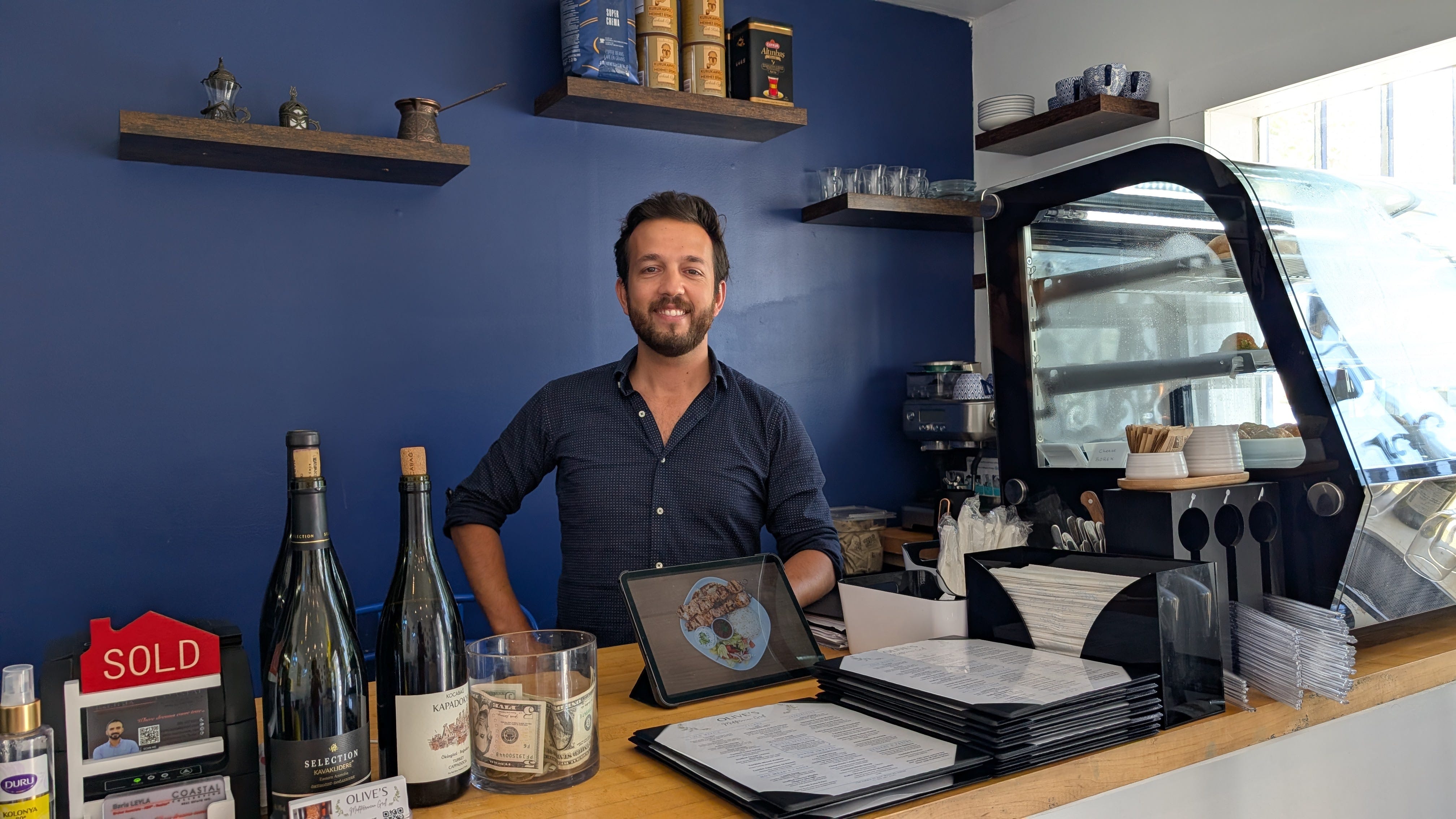
My friends Ozzy and Baris own a wonderful café near my home. They are both from Türkiye. That’s Ozzy in the photo. Their recipes belonged to his grandmother. Inside Olive’s Mediterranean Grill, I feel as if I’ve been transported to the old country.
The other day, I was walking past the mortuary in my neighborhood. I overheard a visitor say, “I guess people die here, too.” This paradisiacal community includes teachers, lawyers, medical folks, first responders, and yes, morticians.
Then, there’s the US Navy, Coast Guard, and Marines. Over 5000 folks in Key West and nearby Boca Chica are military service people, their families, and civilian personnel working on the Navy properties. The importance of Key West and the Dry Tortugas as a strategic defense for the US is yet another significant part of the story of diversity in Key West.
While writing this, I learned from Gerry that an Interagency Task Force is working out of the Navy base within walking distance of my house. The Joint InterAgency Task Force-South (JIATF-S) works to keep criminal organizations from using shipping routes for trafficking drugs, weapons, or human beings. The task force has liaison officers from 20 countries, including Central and South American nations, the UK, the Netherlands, and Canada. These are people in my neighborhood.
Most folks fall into several “categories.” The other day, I chatted with a man named David at the Green Parrot Bar. He was wearing purple, sporting the coolest mustache, and had been the lone person dancing to the live music. He told me he was recently appointed to the Tree Commission. That may sound like a job for tree-huggers to you. However, trees are serious business on an island where the effects of climate change are concerning. A decision to take down a tree requires permission from the City. A civic-minded, free-flow spirit. That is one way to describe this Key West resident.
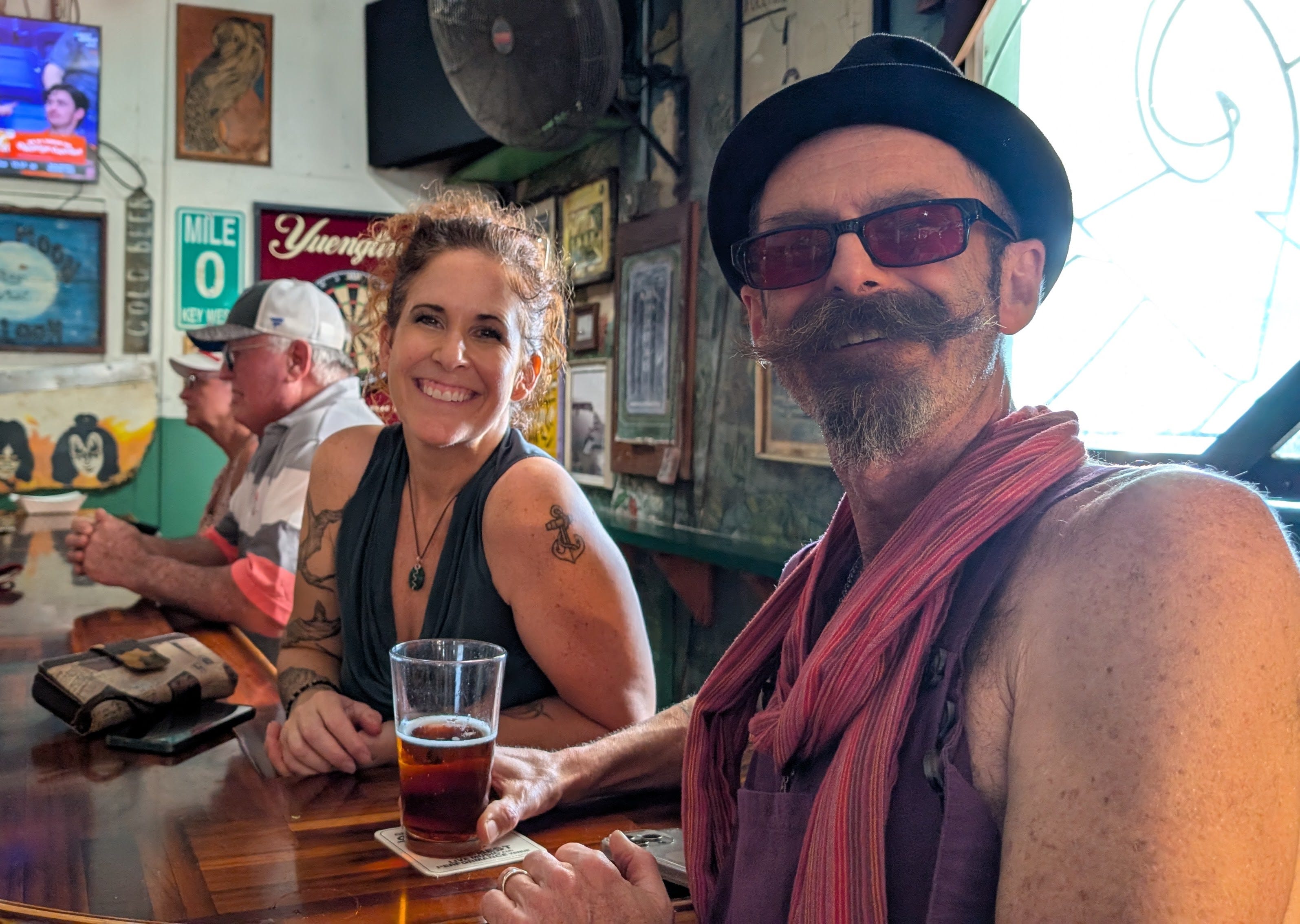
Also in this photo is Jessica who has only lived here for two years but has already established a beautiful gallery in The Shops at Mallory Square.
Diversity of age, skin color, income, and careers exist almost everywhere. The diversity I’ve observed in Key West is not only about a person’s background. Here on this island where anything (that doesn't cause harm) goes, you’ll find folks who are focused on making the most of the present moment.
###
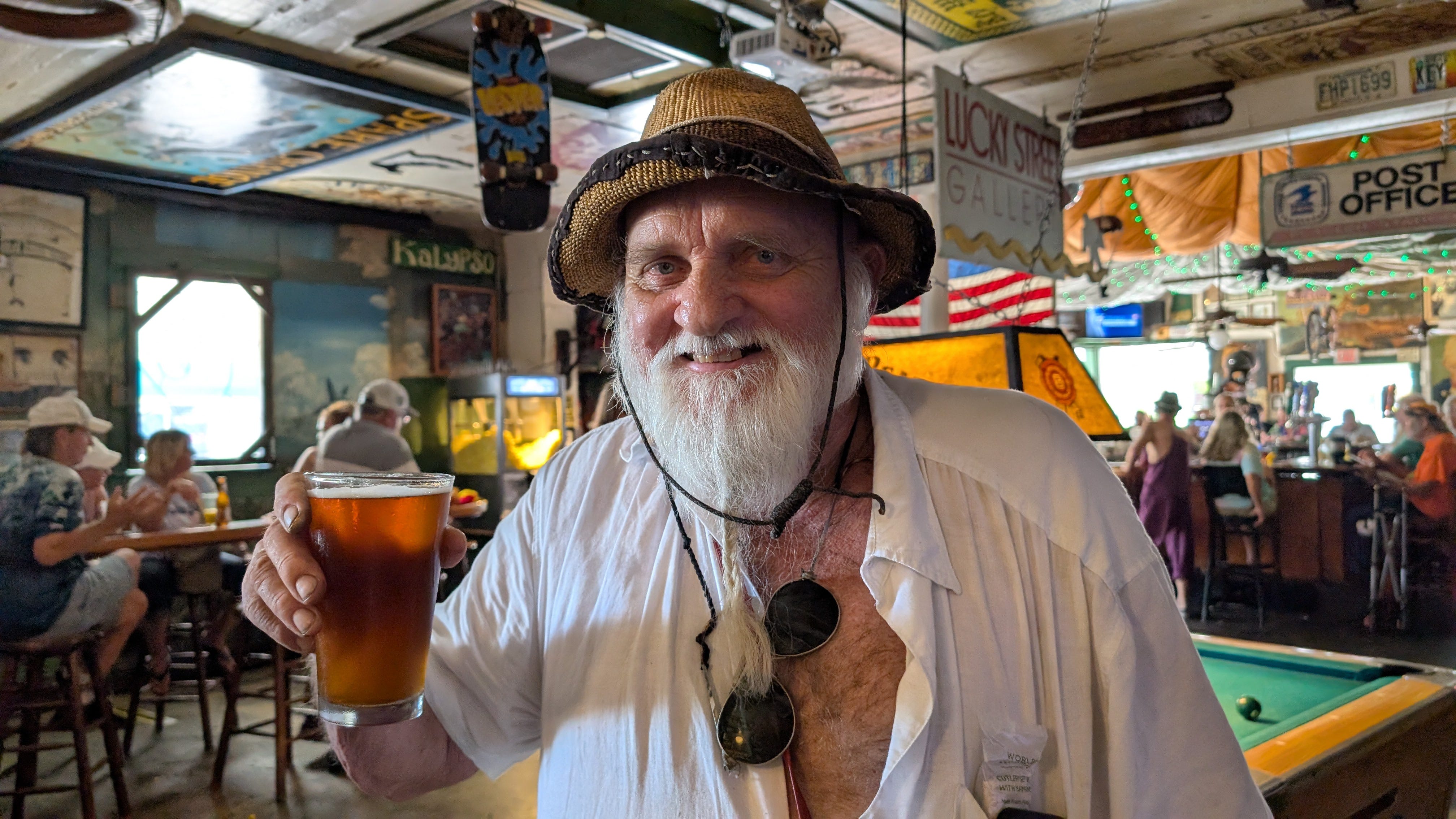
If you want a visual experience of the diversity of Key West, check out Peter Santanello’s YouTube video. It was just released last week. David Wegman (pictured here) is a well-connected artist who can point to his art all over town. He took Peter on a tour that included artist colonies, a typical conch house, and a larger, historic home. You’ll see that all welcomed the duo. At the Parrot yesterday, David Wegman told me “Peter almost took me out” when they were riding bicycles around town.
Touring the town on bicycles… that is so Key West.